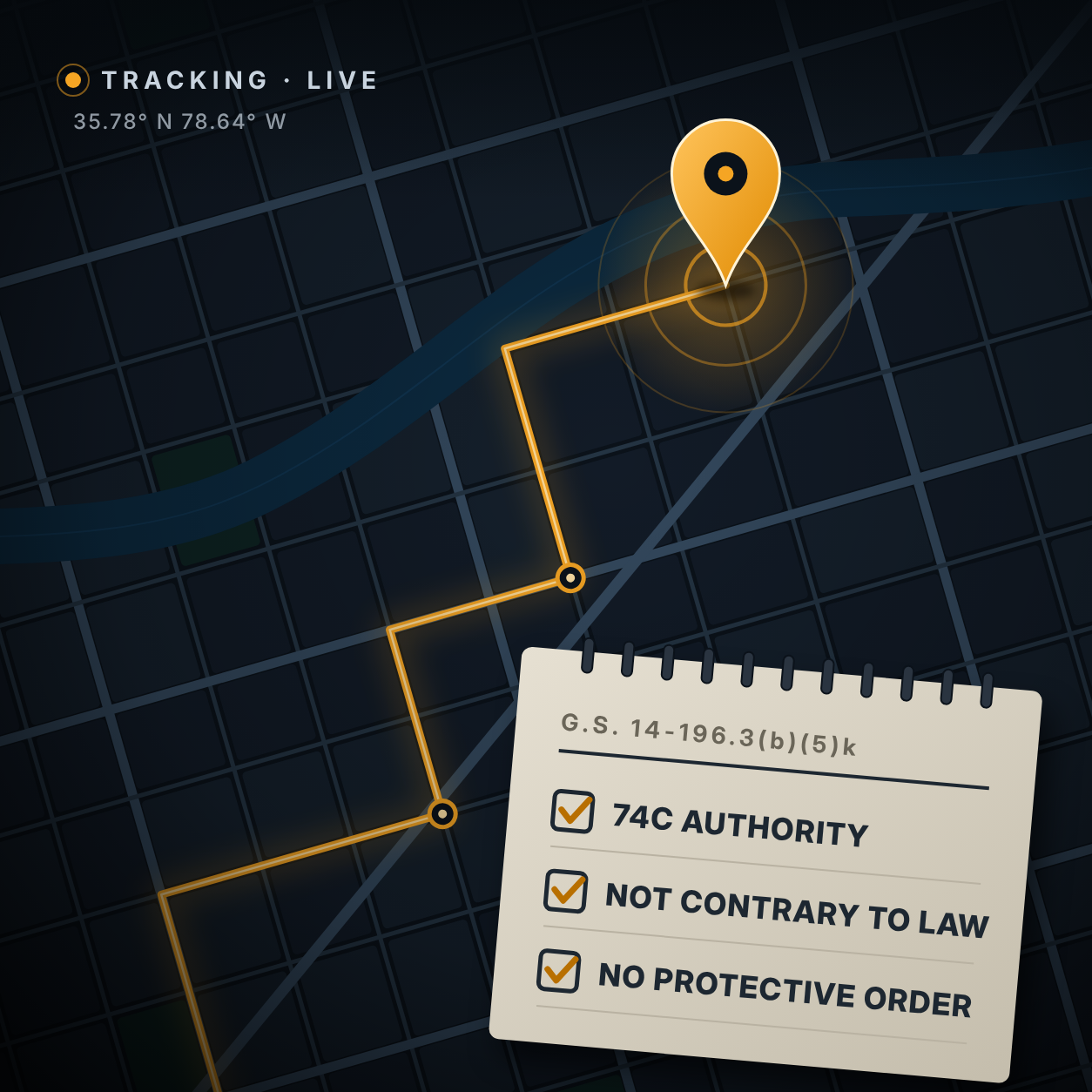
GPS Technology and North Carolina Law Chapter 74C for Private Investigators
Virtual Live CourseCourse Overview
A two-hour live class on how GPS trackers work and when North Carolina law lets a licensed private investigator use one. Covers the cyberstalking statute, G.S. 14-196.3, the investigator exception tied to Chapter 74C, and the due diligence to do before placing a device.
What's Included
- • 2 hours of comprehensive training
- • Professional certification upon completion
- • Access to course materials
Learning Objectives
- • Describe how a GPS tracking device determines and reports location, and identify its limits as evidence.
- • Explain how G.S. 74C-3(a)(8) and G.S. 14-196.3(b)(5) work together.
- • State the three conditions an investigator must meet to use a tracking device lawfully.
- • Identify the court orders that prohibit tracking a person, and explain why they cannot be confirmed online.
- • Apply a written due-diligence process before placing a device.
- • Recognize when a lawful tracker is still a poor professional choice.
Course Content
I. Introduction (10 minutes)
- • Purpose of the course and overview
- • Scope and disclaimer
II. GPS technology for investigators (20 minutes)
- • How tracking devices determine and report location
- • Types of devices: passive, active, hardwired, Bluetooth tags
- • Selecting a device: battery life, size, data export, alerts
- • Live demonstration: monitoring and retrieving location data, exporting raw reports, and the limits of location data as evidence
III. Chapter 74C and the cyberstalking statute (15 minutes)
- • Overview of Chapter 74C: licensing and the regulated professions
- • The private investigator defined, G.S. 74C-3(a)(8)
- • How G.S. 14-196.3 relies on Chapter 74C
- • Board discipline under G.S. 74C-12 and 74C-17
IV. G.S. 14-196.3(b)(5): the tracking prohibition (15 minutes)
- • Definition of an electronic tracking device
- • Elements of the offense and the consent requirement
- • The eleven exceptions
- • Penalty
V. Legislative history of the investigator exception (5 minutes)
- • The 2015 amendment and how the investigator exception changed before it passed
VI. The three conditions of the investigator exception (15 minutes)
- • Authority under G.S. 74C-3(a)(8)
- • Tracking not otherwise contrary to law
- • Domestic violence protective orders under Chapter 50B and other protective court orders
VII. Cases and scenarios (10 minutes)
- • North Carolina decisions that touch GPS tracking
- • Go or no-go scenarios
VIII. Due diligence before using a tracking device (15 minutes)
- • Why protective order cases are not available online
- • Written client inquiry and confirmation
- • Independent records search and courthouse verification
- • Documenting ownership, purpose, and the installation
IX. Professional judgment: when not to use a tracking device (10 minutes)
- • Client approval on insurance and injury cases
- • What happens when the subject finds the device
- • Where a tracker fits best
X. Conclusion and knowledge check (5 minutes)
- • Review of the three conditions
- • Knowledge check and open questions
Your Instructor
Michael Flowers
Michael Flowers is a North Carolina licensed private investigator (NCPI #3814) and co-owner of Cat's Eye Private Investigations in Raleigh, which has operated since 2004. He also founded Triangle Tracking, a GPS tracking platform for private investigators and law enforcement that he has built and run since 2004. He has used tracking devices on cases and supported other investigators who use them for more than twenty years.
Frequently Asked Questions
Does this course count toward my North Carolina continuing education?
Yes. It is approved by the North Carolina Private Protective Services Board as course PPSB-23-013 for 2 hours of continuing education credit.
Is this a live class or on-demand?
It is a live virtual class taught by an instructor at a scheduled time. Plan to attend the full two hours.
Can I join from my phone?
Yes, but a computer is strongly recommended. The statute is read on screen during class and is much easier to follow on a larger display.
Do I need to own a GPS tracker to take the class?
No. The technology segment includes a live demonstration, and nothing in the class requires you to have a device.
Is this a sales presentation for a tracking product?
No. The demonstration uses the instructor's own tracking platform because that is what he has on hand. The principles apply to any device.
Does the class cover other states?
No. It covers North Carolina law. Other states have different tracking laws and may have no exception for private investigators, so check the law of any state a vehicle may enter.
Is this legal advice?
No. The class explains what the statutes say from a licensed investigator's point of view. Take close calls to an attorney.