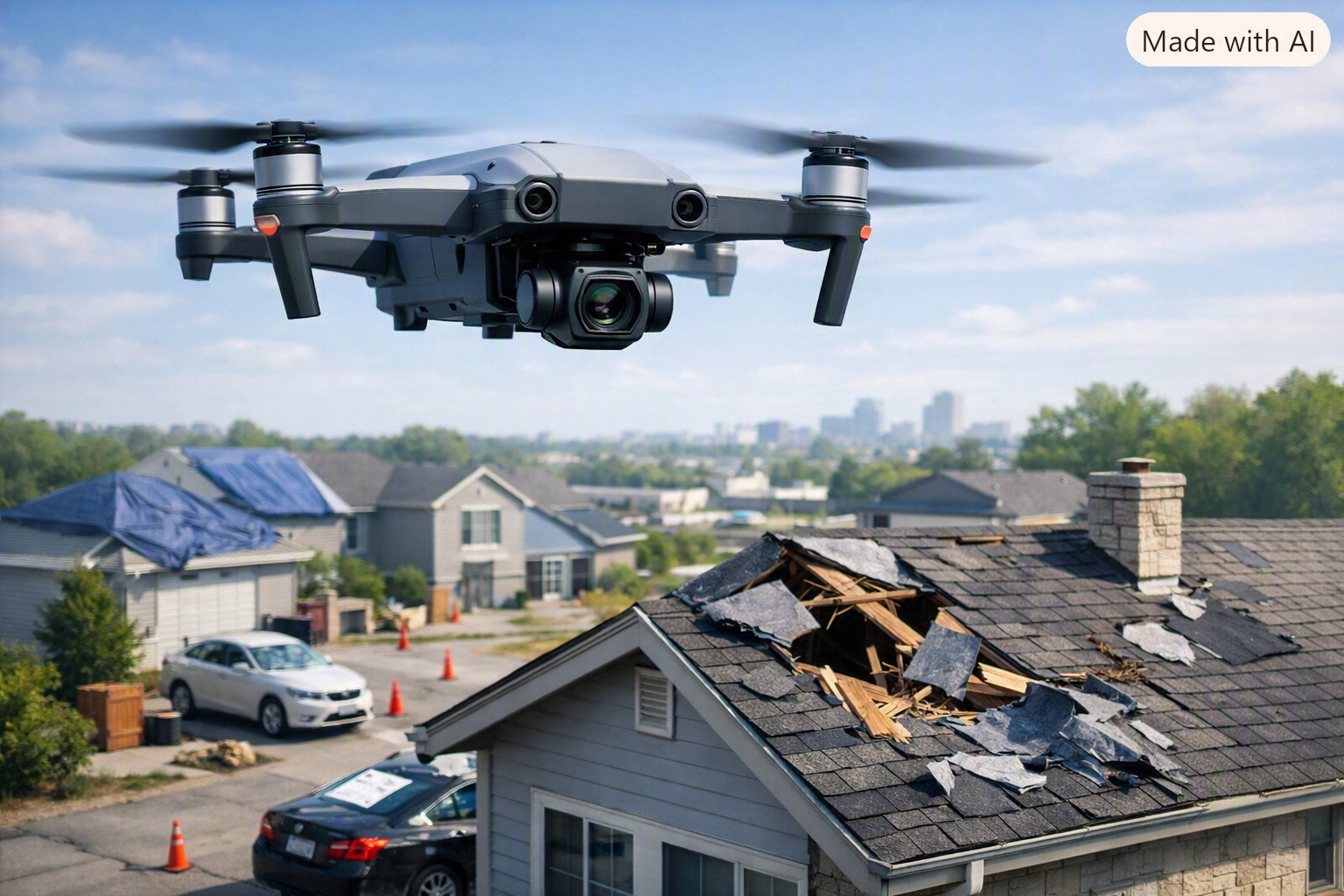
The Drone Revolution - An Earthquake in the Insurance Industry
On-Demand CourseCourse Overview
A 2-hour professional development course for private investigators, insurance adjusters, and security professionals who want to legally leverage drone technology — covering FAA Part 107 certification, North Carolina drone law, and real-world applications in claims assessment, accident reconstruction, agricultural fraud detection, and disaster response.
What's Included
- • 2 hours of comprehensive training
- • Professional certification upon completion
- • Access to course materials
Learning Objectives
- • Trace unmanned aircraft from early military platforms to today's technology and the legal reforms that shaped modern drone regulation.
- • Master precise UAV/UAS terminology and the core imaging technologies — photogrammetry, LiDAR, multispectral, and NDVI.
- • Understand the legal authority behind FAA drone rules and why "purpose over equipment" determines recreational vs. commercial status.
- • Learn how Remote ID functions as your drone's "digital license plate," including broadcast requirements, privacy protections, and FAA registration.
- • Learn the operator categories, commercial requirements, and airspace restrictions (TFRs and NOTAMs) that govern every legal flight.
- • Distinguish legally permitted drone uses — like accident documentation and property mapping — from prohibited ones, like surveillance without consent.
- • Apply North Carolina's consent and privacy requirements on top of federal rules, understanding where state and local law adds restrictions federal law doesn't cover.
Course Content
Course Overview & Meet the Instructor
- • Course purpose and 8 learning objectives
- • Certification requirement: 80% or higher (24 of 30) on the Final Examination
- • CE hours and course code PPSB-22-068
- • 30-day course access period
Module 1: The History & Evolution of Drones
- • Early unmanned-aircraft concepts and innovations
- • Key historical drone platforms: the Kettering Bug, the Albatross, the Predator, the Reaper
- • The FAA Modernization and Reform Act's role in shaping drone law
- • The influence of military drone engineering, including Abraham Karem's contributions
Module 2: UAV Terminology & Technology Fundamentals
- • Precise UAV/UAS terminology and why precision in language matters
- • Professional flight crew roles and responsibilities
- • Imaging technology: photogrammetry, LiDAR, and multispectral imaging
- • NDVI (Normalized Difference Vegetation Index) imagery for agricultural applications
Module 3: FAA Regulations & Remote Pilot Certification
- • The legal authority behind FAA drone regulation
- • Recreational vs. commercial operation: the real distinction
- • Why equipment size or cost doesn't determine the rules that apply
- • The "Purpose Over Equipment" principle and its legal significance
- • The core principle: drones are aircraft, full stop
Module 4: Remote ID & UAS Registration
- • Remote ID as your drone's "digital license plate"
- • What Remote ID broadcasts, and to whom
- • Privacy protections built into the Remote ID rule
- • FAA-Recognized Identification Areas (FRIAs)
- • Standard Remote ID vs. broadcast modules
- • FAA drone registration requirements
Module 5: Drone Operations; Requirements & Limitations
- • FAA operator categories and why they matter
- • Requirements for commercial operators, including holding a Remote Pilot Certificate
- • Temporary Flight Restrictions (TFRs) and NOTAMs — checking both before every flight
- • Timing and process for pre-flight checks
Module 6: Legal Uses in PI & Security Work
- • Distinguishing permitted from prohibited drone uses
- • Why the technology itself doesn't determine legality — purpose and context do
- • Permitted applications: accident documentation, property mapping, pre-surveillance
- • Prohibited use: surveillance without consent
- • How North Carolina law adds requirements on top of federal rules
Module 7: North Carolina Law & Compliance
- • The Dual Authority Principle: federal law is the floor, not the ceiling
- • North Carolina's privacy-focused drone law
- • NC's specific consent requirements, and the consequences of failing to secure consent
- • Local municipal drone ordinances across North Carolina
Final Exam
- • 30 questions
- • 80% or higher (24 of 30 correct) required for your certificate of completion
Your Instructor

Catherine "Cat" Flowers
Catherine Flowers brings 30+ years of investigative expertise as a private investigator, content director for PI Leadership Academy, and retired police officer. Her career spans military police service, local law enforcement, and 26 years as a licensed PI in North Carolina specializing in insurance fraud, workers' compensation, and complex litigation investigations. A FAA Part 107 certified drone pilot, Catherine has testified in Federal Court using drone-gathered evidence. She's an authorized PI instructor across eight states and certified in evidence-based crisis prevention. As a member of the NCAPI Scholarship Committee, she's dedicated to developing future investigators. Beyond her professional achievements, Catherine volunteers with Habitat for Humanity and cherishes time with her husband, Michael, and daughter, Michaela.
Frequently Asked Questions
Who is this course for?
Private investigators, insurance adjusters, and security professionals who want to legally use drone technology in their work — no prior drone experience required.
How long does the course take?
About 2 hours, across 7 modules plus a course overview and final exam, with a 30-day access period.
Does this course cover FAA Part 107 certification?
Yes — Module 3 covers the FAA regulations and Remote Pilot Certificate requirements that govern commercial drone operation.
What's the passing score for the final exam?
80% or higher — 24 of 30 questions correct — to receive your certificate of completion.
Does this course cover state-specific drone law, or just federal law?
Both. Module 7 covers North Carolina's drone law specifically, including the "Dual Authority Principle" — federal FAA rules are the floor, and state and local law can add further requirements on top.
Can I use drone footage for surveillance work as a PI?
Module 6 covers exactly this — where the legal line is between permitted uses (like accident documentation and property mapping) and prohibited uses (like surveillance without consent).
What Our Students Say
" I needed to satisfy 6 hours of training to renew my NC PI license, and we used PI Leadership Academy. Catherine conducted an informative and well-organized class that was interactive and enlightening. Catherine was great with the communication and follow up prior to and following the completion of the 6 hour block of instruction. I would highly recommend PI Leadership Academy. "
J. Viscomi
Security Professional