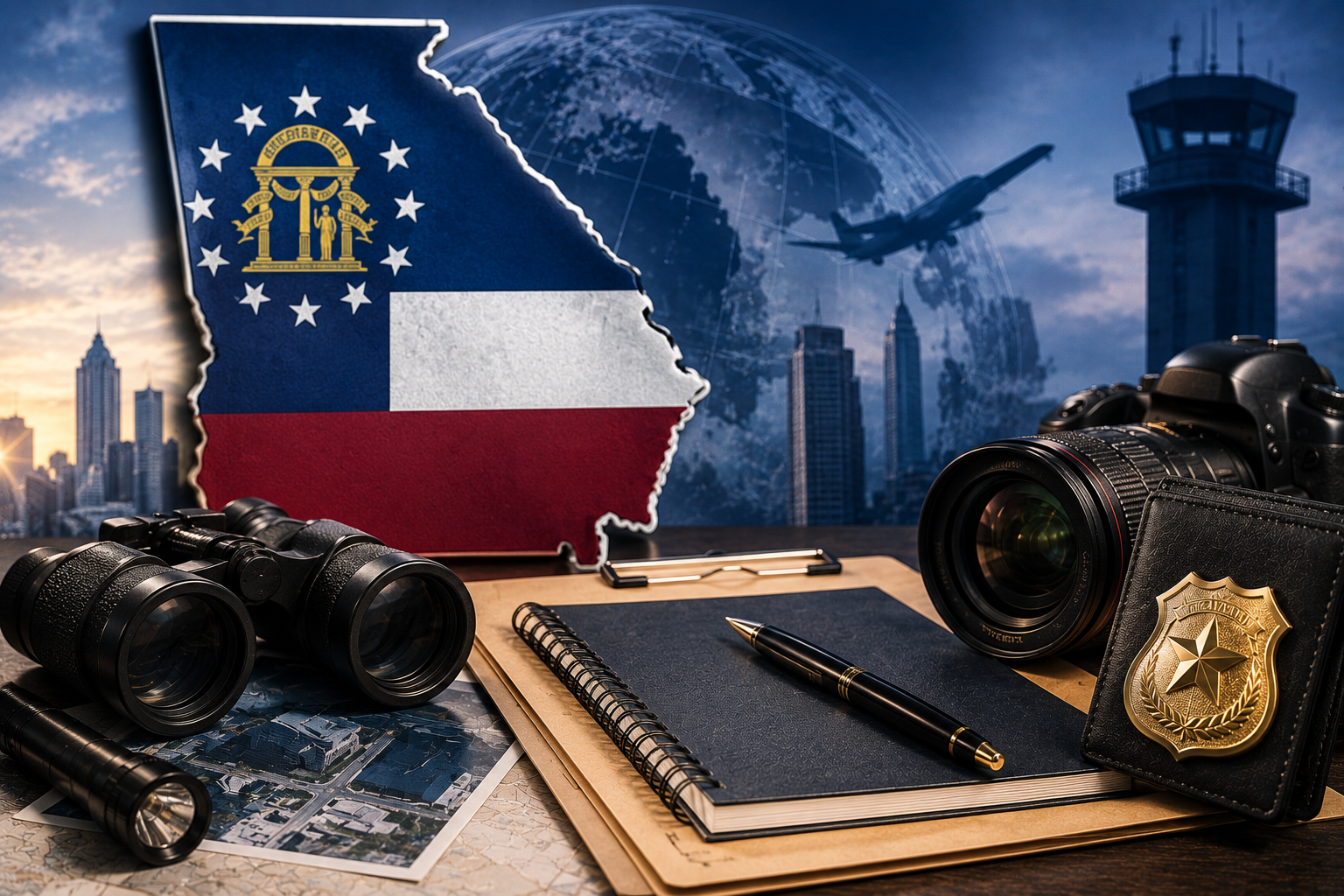
Georgia PI Homeland Security CE — 2-Hour Renewal Course
On-Demand CourseCourse Overview
Georgia Homeland Security Training — 2-Hour Required Block This course satisfies the State of Georgia's mandatory 2-hour Homeland Security continuing education requirement for private detective license renewal under Georgia Board Rule 509-3-.12. Every registered Georgia private detective must complete 16 hours of continuing education each renewal period, which must include 2 hours in Homeland Security covering indicators of terrorism and cooperation with Homeland Security agencies, 2 hours in ethics, and 12 hours of industry-related training. This course fulfills the Homeland Security portion of that requirement. Delivered through PI Leadership Academy and instructed by a Georgia Board–licensed classroom instructor, this 2-hour block meets the Board's content standards. Upon completion, you'll receive a certificate of completion to retain for your records and produce if the Board requests documentation. Fully online and self-paced — complete the requirement on your schedule.
What's Included
- • 2 hours of comprehensive training
- • Professional certification upon completion
- • Access to course materials
Learning Objectives
- • Recognize Threat Indicators Condition
- • Given field scenarios, photographs, and written descriptions of activity encountered during investigative work. Behavior: The learner will identify behavioral, situational, and environmental indicators commonly associated with potential terrorist or criminal threat activity. Standard: Correctly distinguishing genuine threat indicators from innocuous activity on at least 80% of presented scenarios.
- • Apply Surveillance Detection Principles Condition:
- • Given a description of an investigative assignment involving observation in a public or semi-public environment. Behavior: The learner will apply surveillance and counter-surveillance detection principles to recognize when a person, vehicle, or location is itself under hostile observation. Standard: In accordance with accepted investigative tradecraft and the principles presented in the course.
- • Document Observations Accurately and Legally
- • Given a situation involving observed suspicious or threat-related activity in Georgia. Behavior: The learner will determine the appropriate authority to notify and the correct procedure for reporting the activity. Standard: Identifying the correct reporting channel and required information in 100% of presented situations.
- • Define the Private Investigator's Role in Homeland Security
- • Given the framework of public-private safety partnerships presented in the course. Behavior: The learner will explain the role and responsibilities of the licensed private investigator within the broader homeland security and public safety network. Standard: Accurately describing the investigator's responsibilities, limitations, and legal boundaries as presented in the course material.
- • Protect Self, Subject, and Investigation Integrity
- • Given a field situation in which a potential threat is identified during an active investigation. Behavior: The learner will apply personal safety and operational security measures that protect the investigator, the public, and the integrity of the ongoing investigation. Standard: In accordance with the safety and operational guidelines presented in the course.
Course Content
Module 1: Introduction to Homeland Security Awareness
- • Overview of homeland security, why it matters to private investigators, and how the PI's field presence supports public safety. Course goals and expectations.
Module 2: Understanding the Threat Landscape
- • Domestic and international terrorism, lone-actor threats, and criminal activity. How threats are planned and the stages of attack planning investigators may unknowingly observe.
Module 3: Recognizing Suspicious Activity and Threat Indicators
- • Module 4: Surveillance and Surveillance Detection
- • Recognizing hostile surveillance, pre-operational surveillance indicators, and counter-surveillance awareness during investigative assignments.
Module 5: Documentation and Reporting
- • Recording observations accurately and legally — the who, what, when, where, and how. Fact-based reporting without speculation. Reporting through proper channels in Georgia, including fusion centers and "See Something, Say Something" pathways.
- • The PI's responsibilities, limitations, and legal boundaries within the public-private safety network. Privacy, civil liberties, and staying within the scope of licensure.
Module 7: Personal Safety and Operational Security
- • Protecting yourself, your subject, and the integrity of the investigation when a potential threat is identified in the field.
Module 8: Course Summary and Assessmen
- • Review of key concepts, final knowledge check, and certificate of completion.
Your Instructor

Catherine D. Flowers
Catherine D. Flowers – Certified Georgia Security & Investigations Trainer (License No. CLTR001214) Catherine Flowers is an experienced, state-licensed security training instructor in Georgia with over 25 years in law enforcement, military police operations, private investigations, and executive protection training. She is a proven leader, a commissioned officer in the U.S. Military Police Corps, and an FAA-certified drone pilot. Catherine holds Georgia Trainer License CLTR001214, authorizing her to teach and certify security officers, private investigators, and executive/close personal protection specialists under Georgia law. Her expertise covers threat assessment, surveillance detection, defensive tactics, emergency response, regulatory compliance, and professional ethics. Catherine has successfully prepared hundreds of students for Georgia Board security officer licensing, private investigator licensing, and executive protection certification. Dedicated to hands-on security training and real-world protective operations, Catherine designs each course to meet or exceed Georgia Board of Private Detective & Security Agencies requirements. Her students benefit from practical skills, in-depth legal knowledge, and career-focused professional development that prepare them for success in the Georgia security and investigations industry.
Frequently Asked Questions
Who is this course for?
This course is designed for licensed Georgia private investigators, investigative apprentices, agency owners, surveillance and field investigators, process servers, and other investigative and security professionals who want to strengthen their homeland security awareness skills.
Do I need any prior experience or training?
No. There are no formal prerequisites. The course is built for both newly licensed and experienced investigators, with no prior homeland security or counterterrorism training required
How many CE hours does this course provide?
This course provides 2 hours of Homeland Security continuing education, fulfilling the requirement under Georgia Board Rule 509-3-.12(3)(b).
Does this course satisfy the Georgia Homeland Security renewal requirement?
Yes. It satisfies the mandatory 2-hour Homeland Security portion of the continuing education required for Georgia private detective license renewal.
Is the course online?
Yes — it's fully online and self-paced, you will have the ability to start, stop and resume training.
Is there an exam?
Yes. The course ends with a final assessment. You need 75% to pass.
Do I receive a certificate?
Yes. A certificate documenting your 2 CE hours is issued automatically upon passing the final assessment.
Who teaches this course?
The course is created by Catherine Flowers, a Georgia Board–licensed classroom instructor (License No. CLTR001214) and active private investigator.
How many total CE hours does Georgia require for renewal?
Georgia requires 16 hours of continuing education each renewal period: 2 hours in Homeland Security, 2 hours in ethics, and 12 hours of industry-related training. This course covers the Homeland Security block